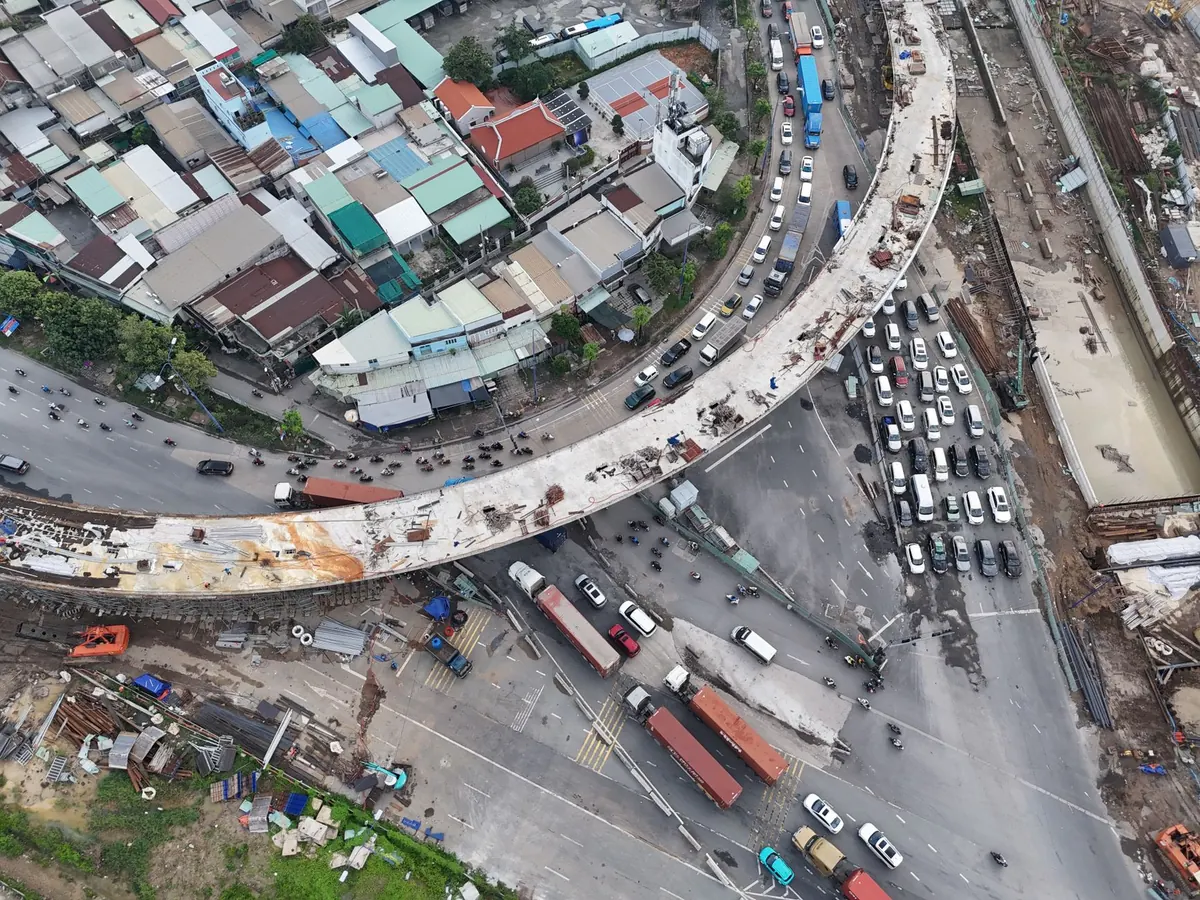
If your morning begins with a right turn off the high street and a quiet prayer at the lights, the next few months will feel different. The roadworks that have been promised, postponed and promised again are moving into their construction phase, and the layout around the top of the Quarter and the station approach is changing with them. Some of it is temporary. A little of it is here to stay. What follows is a plain guide to what is changing, which routes will keep you moving, and what bus passengers should plan for.
What is actually changing
Three pieces of work sit behind most of the disruption. The junction where the high street meets the ring road is being rebuilt, with a narrower mouth, a signal-controlled crossing and a left-turn-only exit onto the ring road. The stretch of high street between the library and the market square becomes one-way northbound for general traffic, with a contraflow lane kept for buses and cycles. And the parking bays on the eastern side come out of service for the duration, partly replaced by a loading bay near the shops.
The exact start dates have shifted more than once, so treat the notices on the barriers as the final word. Signs went up in phases rather than all at once, which is why some streets look finished while others are still untouched.
The one-way loop, in plain terms
If you currently drive south down the high street, that option closes to cars. The replacement is a loop: south along the ring road, in past the leisure centre, then back up the high street on the northbound side. It adds distance, though not always time, because the loop avoids the two sets of lights that cause most of the queueing. Northbound drivers keep the high street largely as it is, minus the parking bays and with tighter lanes past the works.
Your best alternative routes
Which diversion suits you depends on where you are heading. A few that locals are already trying:
- From the south and west: stay on the ring road and enter the Quarter from the north end, rather than cutting across the middle. Longer on the map, quicker in practice at peak times.
- From the east: the road past the industrial estate is open in both directions and has spare capacity outside shift-change times.
- From the north: the park road is the obvious choice, but it narrows near the playing fields and becomes a bottleneck when two vans meet.
- If you are only crossing the Quarter: use the ring road end to end. Do not thread through the residential streets, however tempting the satnav makes it look.
A word on the back streets near the church and the primary school. They will take more traffic than they were built for, and they are full of children at drop-off and pick-up. Drive them at walking pace, and if you can avoid them entirely between eight and nine in the morning, please do.
What this means if you take the bus
Bus passengers get the better end of this deal, at least on paper. The contraflow lane means buses keep running in both directions along the high street while general traffic is pushed around the loop. During the peaks, that should make the bus noticeably quicker than driving the same trip.
The catch is the stops. The stop outside the old post office is suspended while the kerb is rebuilt, and the temporary replacement sits a short walk away near the market. Several stops along the eastern side move in the same way, so allow a few extra minutes for the walk at each end of your journey. If you use a live tracking app, check it before you leave the house rather than at the stop — temporary stops are not always shown correctly in the first week.
School services and the early-morning commuter routes are the ones most likely to be retimed. If your bus is normally the one you catch by a hair, pick the one before it for the first fortnight.
When the delays will bite hardest
Not all hours are equal. The morning peak runs roughly from a quarter to eight until just after nine, thickened by the school run. The afternoon peak starts earlier than most people expect, around half past three, and eases after six. Market day and Fridays are heavier than the rest of the week, and wet weather makes everything worse, partly because more people drive and partly because everyone brakes earlier.
The first week of each new phase is the slowest. Drivers are still learning the loop, delivery vans are still finding the loading bay, and a single confused right-turn can back up a street for ten minutes. Add a quarter of an hour to your journey for the first few days, then adjust once you have a realistic picture.
Six things to do before your first run through
- Check before you leave, not after. A thirty-second look at the council's roadworks page or the operator's service updates beats twenty minutes in a queue.
- Pick one route and stick to it. Constantly improvising puts you in unfamiliar junctions at the worst possible moment.
- Leave earlier for the first fortnight, then trim the buffer once you know how the loop behaves at your usual time.
- Fuel or charge at the weekend. Detouring to a filling station mid-commute is more painful than it sounds when three streets are down to one lane.
- Talk to your neighbours about sharing lifts, especially if you work similar hours and pass the same junction.
- Keep the bus as a backup plan, even if you normally drive. Knowing your route and stop in advance takes the panic out of a morning when the ring road seizes up.
If you walk or cycle
Footways are being closed in short sections as the kerbs are rebuilt, with signed diversions that are usually obvious and occasionally not. Where a crossing has been moved, use the temporary one even if the old desire line still looks walkable — that is where the plant and the excavations are.
Cyclists keep the contraflow lane in both directions, which is a genuine improvement once the works finish. Until then, ride predictably, take the lane where it is too narrow to be overtaken safely, and use lights and something reflective through the darker months. Do not use the pavement as an escape route; the footways are narrower than usual and full of people stepping around barriers.
Where to check before you set off
The most reliable sources are the ones closest to the road: the notices fixed to the barriers, the council's roadworks page, and your bus operator's service updates. Local shops and noticeboards often carry changes before they appear online, and community groups are useful for the kind of detail no official notice includes — which junction is snarling up at ten past eight, which temporary stop is actually being used.
If something looks wrong — a diversion sign turned the wrong way, a temporary stop with no timetable, a lane closed with nobody working — report it rather than working around it. These schemes are adjusted while they run, and complaints about a badly placed barrier do get things moved. Plan for a slower few months, keep a little patience in the tank, and the Quarter will come out of this with a junction that actually works.
Photo: Cầu Đường Việt Nam / Pexels